
IDEXX Cancer Dx testing
Resources
IDEXX Cancer Dx resource directory
Getting started with IDEXX Cancer Dx testing.
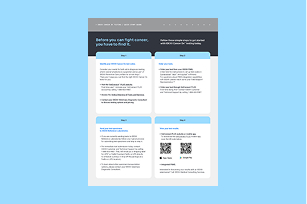
Quick start guide
Step-by-step instructions to start using IDEXX Cancer Dx testing.

Ordering and setting up tests in Cornerstone

Ordering and setting up tests in Neo
Ordering and setting up tests in ezyVet

Cancer articles at The Vetiverse

Lymphoma in Dogs 101: A Guide for Veterinarians
From Breed to Environment: Key Risk Factors for Canine Cancer
How to Talk to Pet Owners About Cancer Including Top Questions to Answer

Dog Breeds and Cancer: Which Dogs Have Increased Risk?

How to Distinguish B-Cell Lymphoma from T-Cell Lymphoma in Dogs

Practical Strategies for Introducing Cancer Screening Into Wellness Appointment Conversations
Frequently asked questions
The IDEXX Cancer Dx panel provides accurate detection of biomarkers specific for lymphoma and mast cell tumor in canine whole blood and serum. B-cell vs. T-cell phenotype classification will be provided with positive lymphoma results as available at no additional cost.
The Cancer Dx panel is primarily intended to complement existing oncology diagnostics as a screening offering, by adding capability to detect disease in healthy-appearing at-risk dogs. It is not intended to replace existing tools which are relevant once clinical signs are apparent. IDEXX recommends Cancer Dx at wellness visits for at-risk dogs.
The Cancer Dx lymphoma test, which is available as a single-cancer test, is suitable for use in disease monitoring and as an aid in diagnosis, in addition to the primary screening use case for the panel as a whole.
At-risk dogs include all breeds aged 7+ and breeds at increased risk for cancer aged 4+. Breeds at increased risk for lymphoma: beagle, Bernese mountain dog, boxer, bullmastiff, Doberman pinscher, English bulldog, flat-coated retriever, French bulldog, golden retriever, Labrador retriever, miniature schnauzer, rottweiler, and Scottish terrier. Breeds at increased cancer risk also include: Boston terrier, Chinese pug, German shepherd, Irish wolfhound, Pembroke Welsh corgi, Rhodesian ridgeback, Scottish deerhound, shar-pei, Siberian husky, and weimaraner.
2 mL of serum and 1 mL of EDTA whole blood, whether run standalone, as an add-on, or in a profile. When run with chemistry and CBC, it uses a portion of the same 2 mL serum/1 mL EDTA specimens — no separate tubes needed.
Results are reported as either "positive" or "negative" for each of the cancer tests within the panel. If a result can't be obtained, the customer is notified in their results view.